When people think of a solar array, the solar panels are probably the first thing they think of. They might be the only thing they think of too. But solar panels by themselves don’t do anything. That’s where the “inverter” comes in. You can think of the inverter as the “brain” of the solar array. The inverter converts direct current (DC) power to alternating current (AC) which is what allows us to plug in all of our devices and appliances in our homes. There are three main types of inverters on the market for your system: string and micro-inverters are the two most commonly used inverters, while the power optimizers are essentially a hybrid of the string and micro-inverters. There are pros and cons to all of them. Here, I’ll go into a bit more detail on string and micro-inverters.
String Inverters
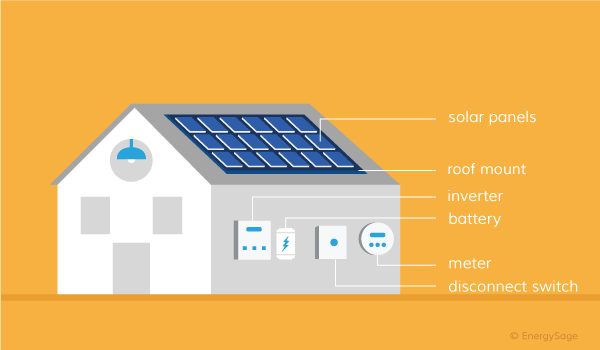
String inverters used to be the only option you had for a solar array. Now, there’s a few more options, and string inverters are the most cost-effective option available. For them to work to their maximum efficiency, your solar array will generally need to be free of shade and facing one direction. In a string inverter system, all of your panels are arranged into groups and the “string” of panels is connected to a single inverter, which then converts the energy from DC to AC. While they are the cheapest overall option, string inverters do have their downsides. The biggest downside of the string inverter is that it will only produce as much electricity as its least productive panel. If you have a tree that shades three of your panels for an hour each day, the entire string would be reduced to that level. If your panels are installed facing different directions, you would also not get the same energy output from all panels. Another downside is that if you have to replace your inverter and it’s not covered by warranty, it is much more expensive to replace your sole string inverter than it would be to replace one or two micro-inverters, which I will dig into next.
Micro-Inverters
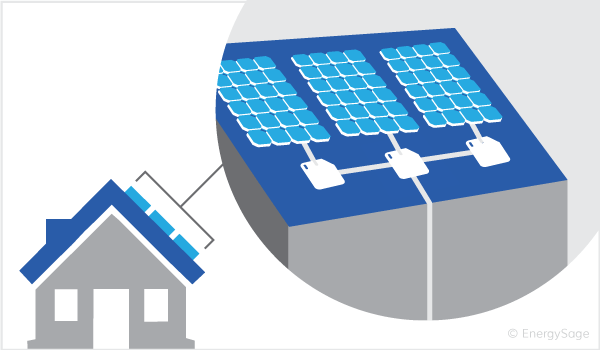
Micro-inverters have gained popularity over the past ten years. They are more expensive up-front than string inverters but their costs are falling and they are generally more efficient. Unlike in a string inverter set-up, where a group of panels are connected to one inverter, a micro-inverter is much different. Each panel is connected to its own micro-inverter. They can be mounted next to the panel but most panels these days have special plug-ins on the backside that allow the micro-inverter to sit nicely underneath and out-of-site. The main advantage of a micro-inverter system is that since each panel has its own inverter, each panel generates exactly the amount of power it is producing, meaning if a tree is shading one panel during a certain time of day, only that panel is affected. The rest of the panels, if they are shade-free, produce at maximum efficiency. Another advantage is that micro-inverters allow you to monitor not only the system as a whole, but each individual panel. You can see how much each panel is producing at any time of the day. If you need to replace a micro-inverter, it is much cheaper to replace a single micro-inverter than it is to replace a string inverter.
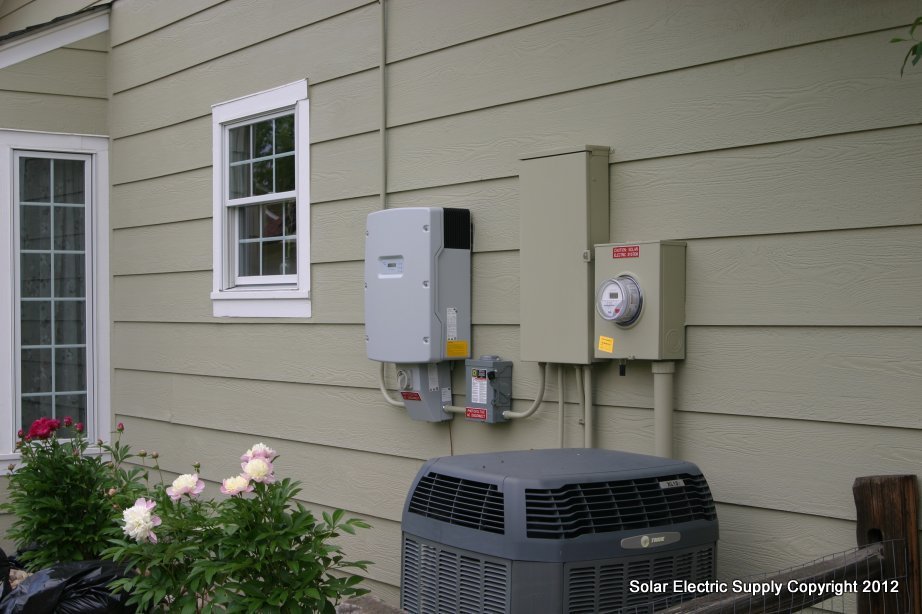
Generally speaking, your inverters will be grid-tied
Unless you live in a very rural area, your solar array will most likely be tied to the energy grid. This isn’t a bad thing. This allows you to remain connected to the grid in the event of your system going down and also gives you the ability to purchase your system without having the need to also purchase a solar battery, which is used to store excess solar electricity. If your solar array isn’t large enough to cover your entire electric bill, you will use the electricity that is produced from your system first, and then you would “buy” the energy from your utility company for the remainder of the billing cycle. A special solar electrical meter is also installed to help the utility company keep track of how much energy you are producing. If your system ends up generating more energy than you use, the utility company will buy back the excess amount and your bill for that month would only show a grid connection fee, which is typically no more than $5.

 Prescott Solar Blog